

Valves are indispensable components in many fluid-handling applications. They are used to regulate flow, control pressure, and prevent backflow. Available in a wide variety of types and specifications, each serves a distinct function.
Understanding the differences between various valve types helps in selecting the most appropriate one for a given application. This blog post explores the distinctions between check valves and globe valves, focusing on their operating principles and areas of application.
Operating Principles
Check Valves
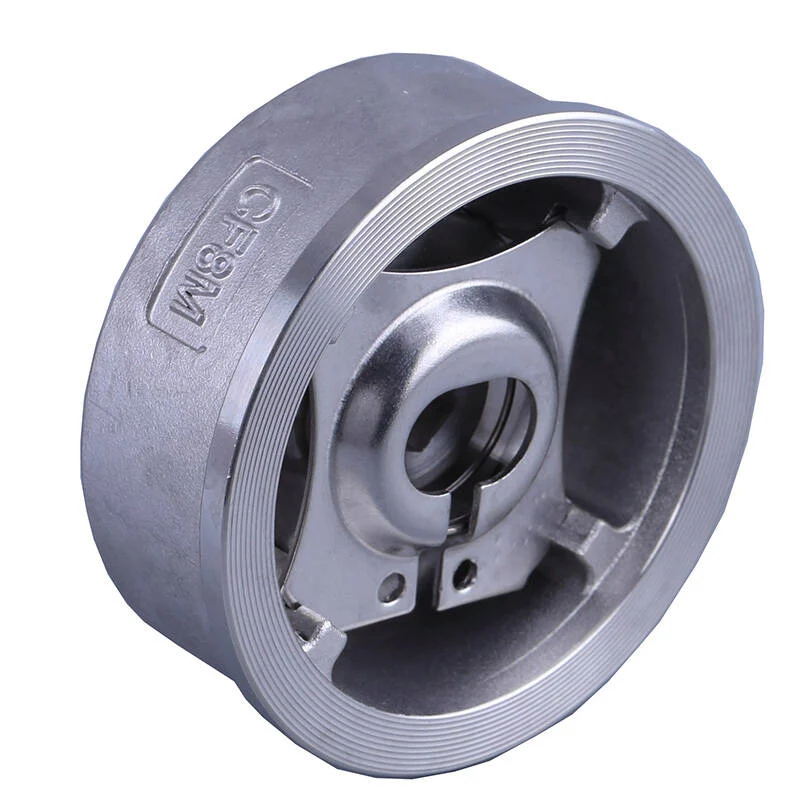
The operating principle of a check valve is straightforward: it contains an internal disc or piston. When the pressure on one side of the valve exceeds that on the other, the valve opens. Once the pressures on both sides equalize, the valve closes—driven by a spring or gravity—and remains shut until the pressure differential shifts again. Notably, this entire process occurs automatically, requiring no manual intervention.
Check valves are designed for systems operating under pressure or vacuum conditions. They come in various specifications and are constructed from materials such as metal, plastic, or rubber. This versatility allows them to handle diverse types of fluids and withstand high-pressure or high-temperature environments, without the risk of leakage or structural failure caused by thermal expansion and contraction.
Globe Valves
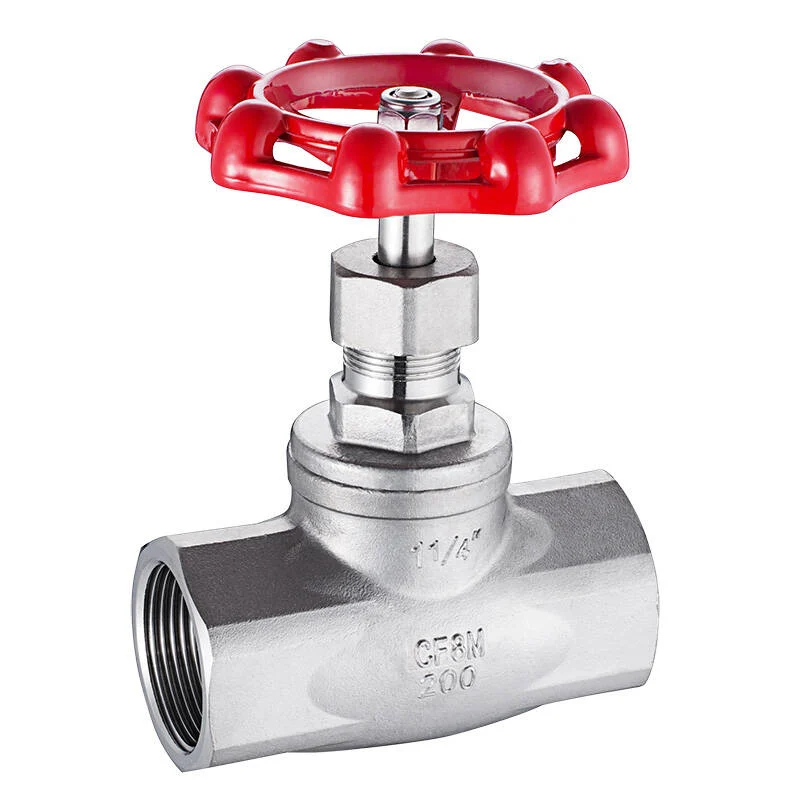
Globe valves operate through an actuator that drives the valve stem in a linear, active motion:
Fully Open: The actuator retracts the stem, lifting the disc away from the seat. Fluid flows through the valve’s internal passage—which may be Z-shaped, Y-shaped, or angled—with flow reaching its maximum when the disc is fully retracted.
Throttling: The actuator extends the stem partially, positioning the disc somewhere between fully open and fully closed. The gap between the disc and the seat determines the flow rate; a smaller gap results in lower flow and a greater pressure drop—a feature specifically engineered for flow regulation.
Fully Closed: The actuator extends the stem completely, pressing the disc firmly against the seat. Unlike check valves, globe valves require manual or actuated operation, allowing operators to regulate flow or completely isolate specific sections of a piping system.
Applications
The fundamental difference in the applications of check valves and globe valves stems from their distinct functional roles: check valves are primarily designed for automatic backflow prevention, while globe valves are intended for active shut-off and flow regulation.
| Application Industry | Check Valve | Globe Valve |
| Petroleum and Petrochemicals | Installed at pump outlets to prevent backflow that could damage the pump, and to ensure that high-pressure media in hydroprocessing or reforming units do not flow back into low-pressure sections—thereby preventing safety incidents. | Isolation and flow control for pipelines transporting crude oil, refined petroleum products, and chemical raw materials; precise regulation of feed flow into reaction vessels; and emergency shut-off for pipelines carrying flammable, explosive, or hazardous media. |
| Electric Power & Energy | Installed at the outlets of feedwater pumps and on steam turbine extraction lines to prevent the backflow of high-temperature water—which could otherwise strike and damage impellers during a sudden pump shutdown—and to protect thermal power equipment from water hammer damage. | Main steam, boiler feedwater, and blowdown piping in thermal and nuclear power plants; isolation of high-temperature, high-pressure media in supercritical power units; and flow control for molten-salt thermal energy storage loops in concentrated solar power (CSP) plants. |
| Chemical and Pharmaceutical Manufacturing | Preventing backflow or cross-contamination of media between different reaction vessels; ensuring that clean pharmaceutical solutions are not contaminated by upstream piping; and guaranteeing the unidirectional flow of media throughout the pharmaceutical manufacturing process. | Controlling the flow (on/off) of acidic, alkaline, or corrosive chemical/pharmaceutical solutions; maintaining sterile isolation within high-purity water and reagent piping systems; and enabling precise, fine-tuned flow control for micro-dosing of chemical agents. |
In simple terms, use a globe valve when you need to manually control the flow—starting or stopping it, or adjusting the flow rate. Use a check valve when you need to automatically prevent backflow and protect upstream equipment. These two types are often used together in the same pump system piping, as their functions complement each other.
Summary
Check valves and globe valves serve very different purposes, yet both are indispensable for fluid handling. If you are looking to purchase high-quality check valves or globe valves, Leina looks forward to serving you.